
Solutions
Public & Analyst Relations
Thought leadership that drives leads.



Experience
Our partners average 25+ years managing analyst relations programs for industry leaders such as Symantec, ServiceNow, Nokia and Riverbed. We’ve known the key media and analysts for decades.

Relationships
We’ve grown-up with all the senior media and analysts that cover technology. They respect and trust us. When we call, they are willing to hear us out.

We Know Your Space
We’ve focused on B2B technology for 31 years. We have strong experience with Enterprise Software, Infrastructure, Security, Storage, Cloud, SaaS, Telco and Network Monitoring.

Effective Public Relations and Analyst Relations is built upon stories that engage and illuminate readers. Stories that are news-worthy. And, stories that offer a clear differentiated message.

Core to achieving quality coverage is building positive, consistent relationships with influential reporters and analysts. They need to see that you understand what they need, and won’t waste their time and when you call, it is worth their time. With that foundation of trust and respect, the media and analysts are happy to amplify your message.

Strategic media placements boost general awareness for your company, product or service. Better yet, they also generate leads. Top analysts can also be advocates and can amplify your company messages and create positive content. Coverage that presents your core value proposition, demonstrates customer successes and explains differentiators can drive traffic back to your site and generate leads for your sales team to nurture.
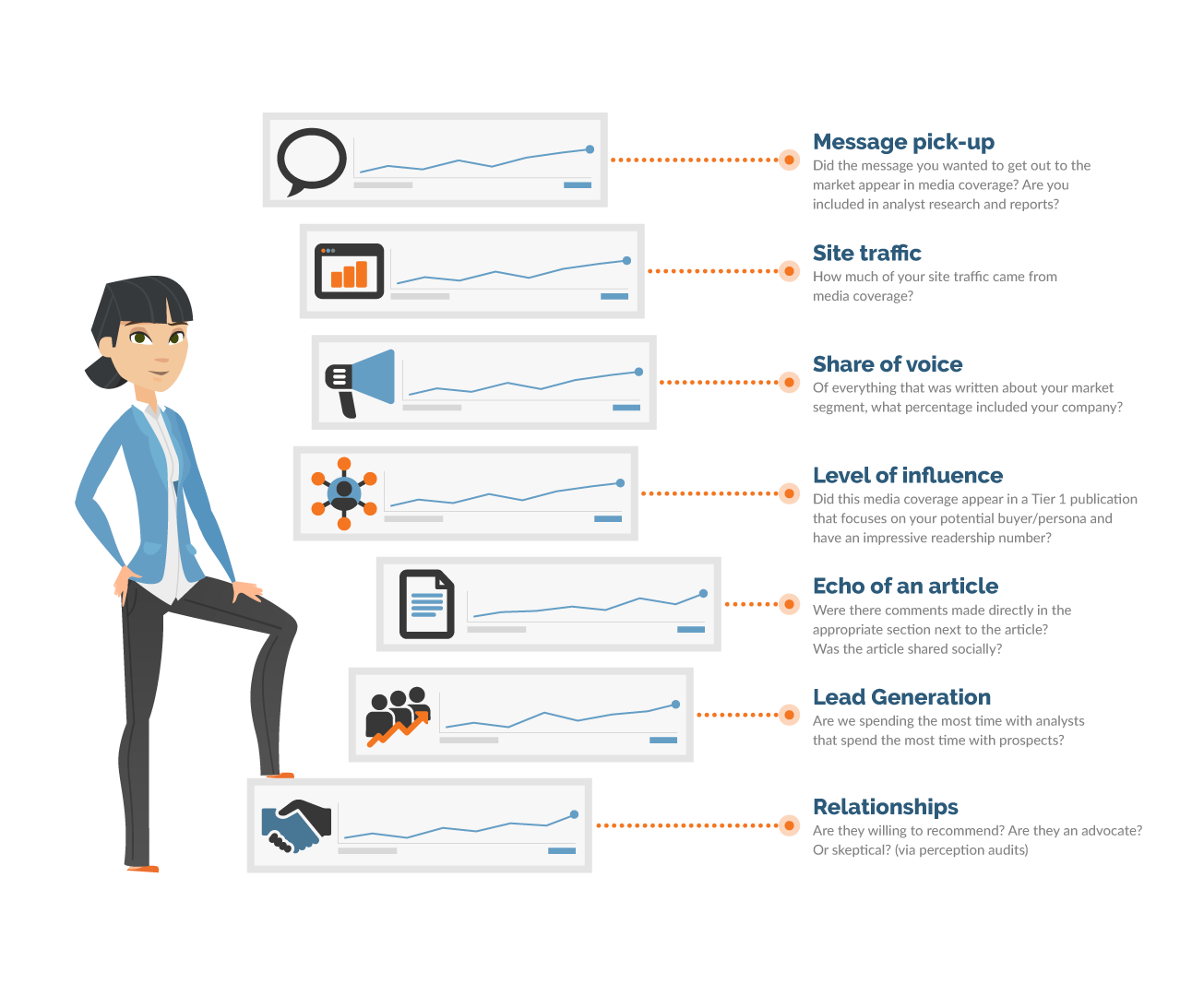

Did the message you wanted to get out to the market appear in media coverage? Are you included in analyst research and reports?

How much of your site traffic came from media coverage?

Of everything that was written about your market segment, what percentage included your company?

Did this media coverage appear in a Tier 1 publication that focuses on your potential buyer/persona and have an impressive readership number?

Were there comments made directly in the appropriate section next to the article? Was the article shared socially?

Are we spending the most time with analysts that spend the most time with prospects?

Are they willing to recommend? Are thay an advocate? Or skeptical? (via perception audits)

 Book a meeting


